Industry
Poorr in Affordable Mental Health
One of 10 directions Poorr could take — a possibility explored in full, not a commitment. The buyer picks one, picks several, or holds the whole menu as optionality.
Mental-health care in the United States is expensive and opaque, and the existing consumer brands in the space are mostly venture-funded telehealth platforms whose economics depend on users who have insurance with strong behavioral-health coverage. The not-yet-rich household has the same mental-health needs as any other household, and fewer of the resources. They are more likely to be uninsured or underinsured, more likely to have a high-deductible plan where a single session is a meaningful household expense, and more likely to live in a zip code where in-network therapists have six-month waitlists. Poorr's affordable-mental-health surface is a literacy and navigation layer, not a clinical product. The brand does not provide therapy. It provides the reader with a clear, practical guide to what therapy actually costs in their region, what the sliding-scale networks are, how community mental-health centers work, which employee assistance programs cover what, and how to use a health savings account toward mental-health care. It treats the question 'can I afford this' as the legitimate first question, which is the question most mental-health brands are too polite to engage with directly. The editorial arm covers the adjacent financial questions that drive the clinical ones. Money is one of the top causes of relationship distress and one of the top causes of individual anxiety; Poorr's money content and Poorr's mental-health content have natural overlap. Articles on how to structure a conversation about household finances with a partner, how to negotiate a medical bill that is contributing to depression, how to talk to an adult child about financial support — these belong in both categories and do the reader more good than either category does alone. The partnerships are nonprofit. Open Path Collective, the community mental-health center network, state-level crisis lines, and the handful of venture-funded platforms that actually price honestly for low-income users get editorial coverage on the merits. The affordable-mental-health audience is served by pointing them toward the institutions that will actually help, not by selling them a branded product that pretends to replace care.
Scenarios
Three plausible products or platforms within this vertical. Pick the angle that fits — the rest reveal once you commit. Or click "show all" if you want the static grid back.
Which spark sounds most like you?
Scenario · 01 of 3
Regional Cost-of-Care Guide
A state-by-state editorial guide to what mental-health care actually costs for uninsured, high-deductible, and Medicaid-covered users. Includes sliding-scale networks, community mental-health center directories, and practical notes on what to expect from each.
HSA / FSA Literacy
A focused section of the Poorr content library on how to use health savings and flexible spending accounts for mental-health care — what qualifies, what does not, how to document, and what to do if the claim is denied. Paired with an in-app HSA balance tracker.
Money-and-Mind Editorial Series
A cross-category editorial series addressing the financial stressors that drive anxiety and depression — debt, housing instability, job precarity — written by Poorr editors in partnership with licensed clinicians who review for clinical accuracy.
Product Concepts
Named, described, and visualized so the brand feels alive. Nothing here is a promise — use them, rename them, replace them, or leave them on the site as ambient proof that Poorr has legs.
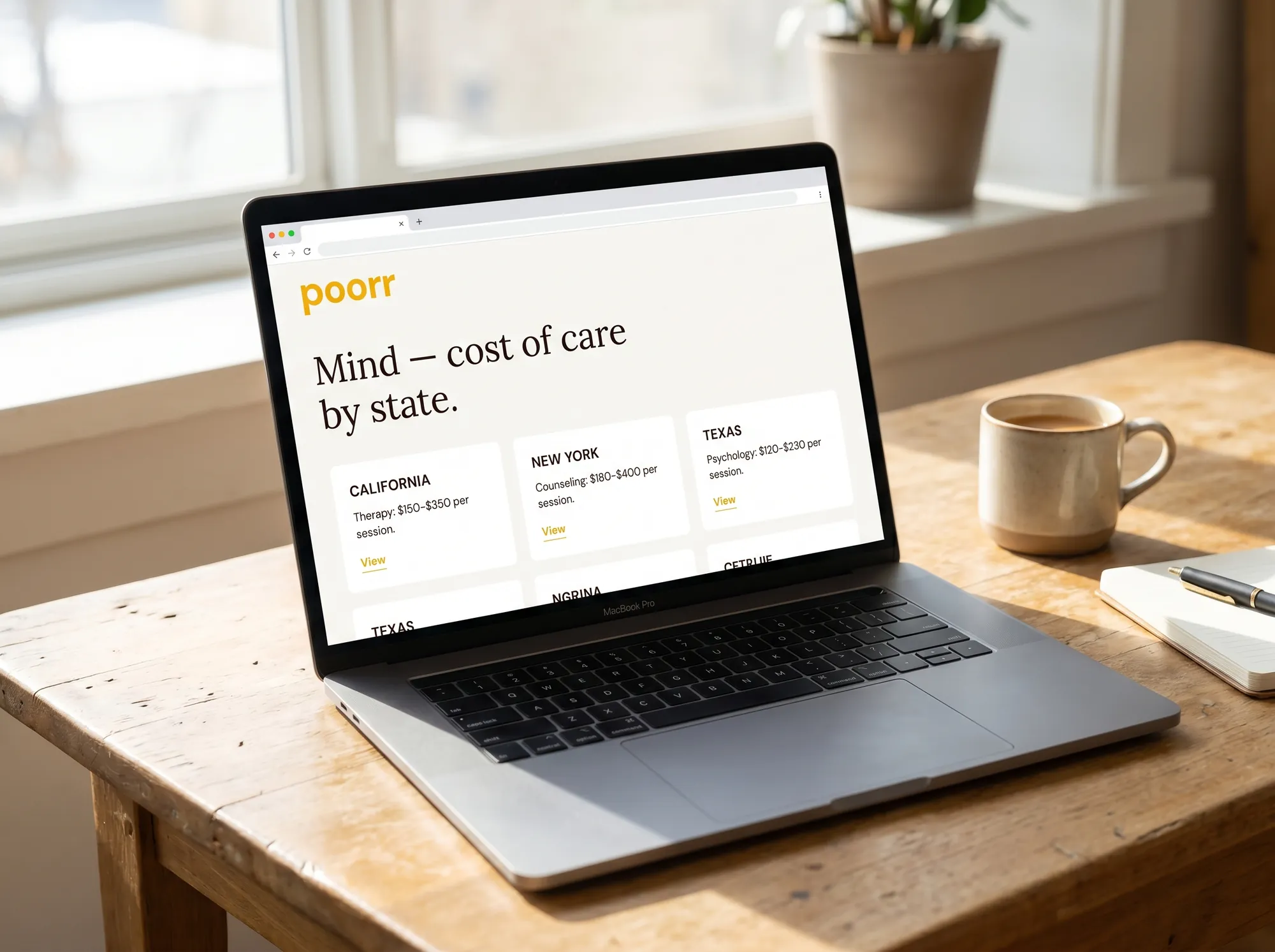
Editorial resource
Poorr Mind
A content library and directory inside Poorr.com covering regional cost-of-care, sliding-scale therapist networks, HSA/FSA literacy, and crisis resources. Free, always ad-free, editorially maintained by Poorr staff with clinician review.
$0
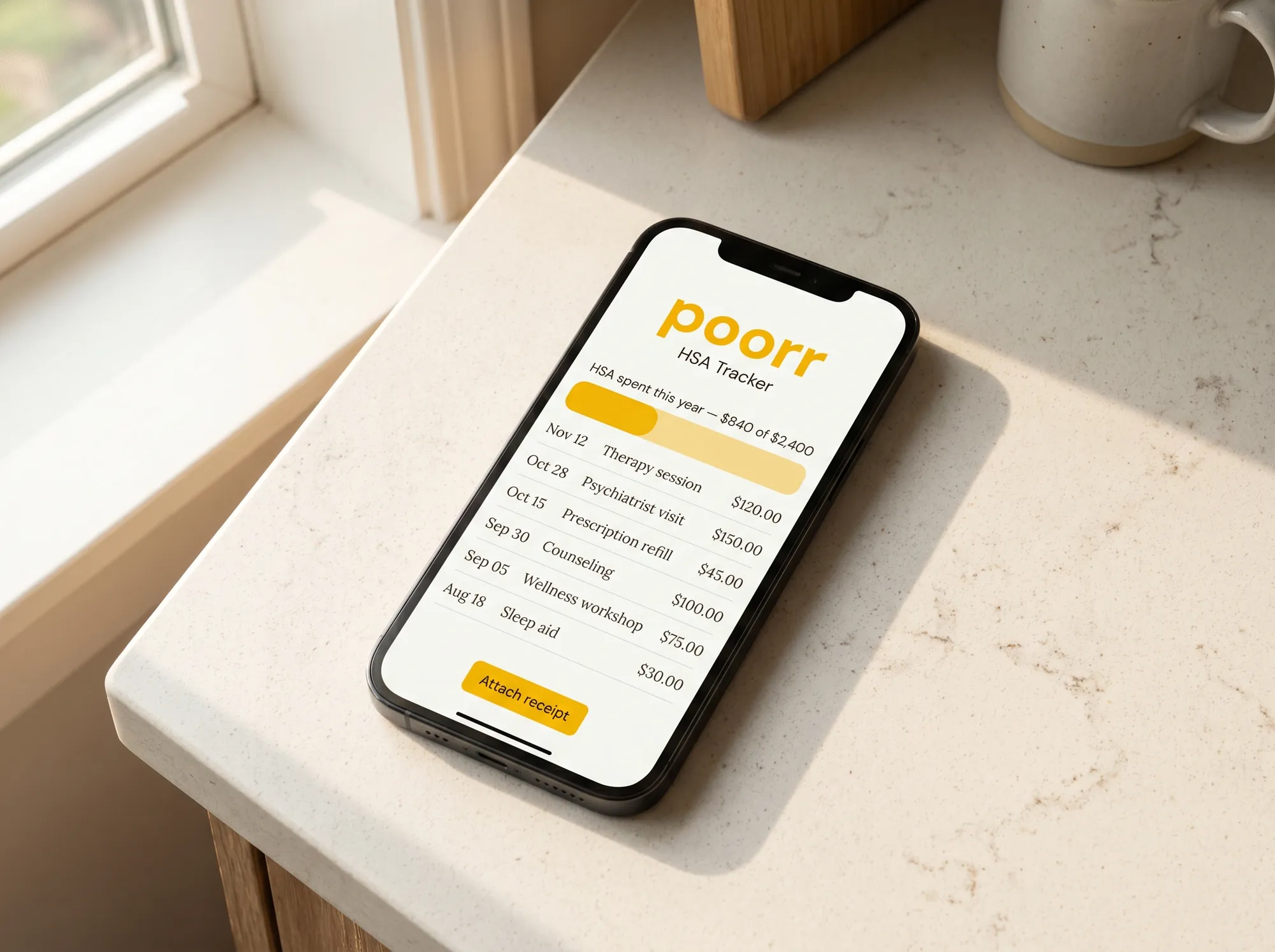
Mobile app module
Poorr HSA Tracker
A simple in-app module that tracks mental-health-eligible HSA and FSA spending, keeps receipts organized for year-end documentation, and flags when a claim is likely to be denied and how to appeal.
Included with Poorr app

Printed guide
Money and Mind Guide
A 80-page printed guide pairing financial-stress literacy with mental-health navigation. Co-written by Poorr editors and licensed clinicians; covers debt-driven anxiety, housing instability, and the money conversation with a partner.
$28
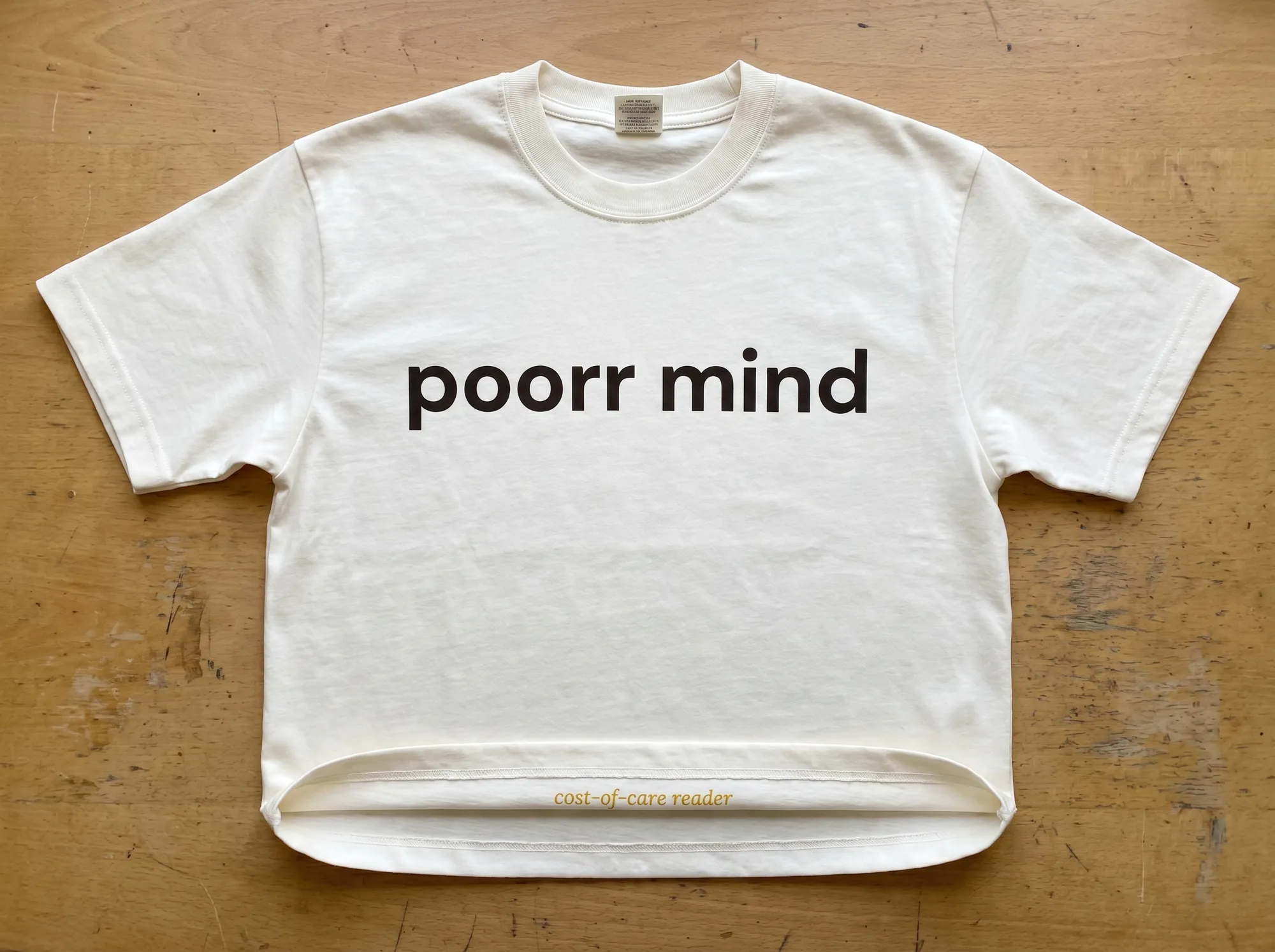
Apparel
Poorr Mind Tee
A heavyweight cream cotton tee with the wordmark in warm charcoal and a small Lora italic line at the hem reading 'cost-of-care reader.' For Mind subscribers.
$32
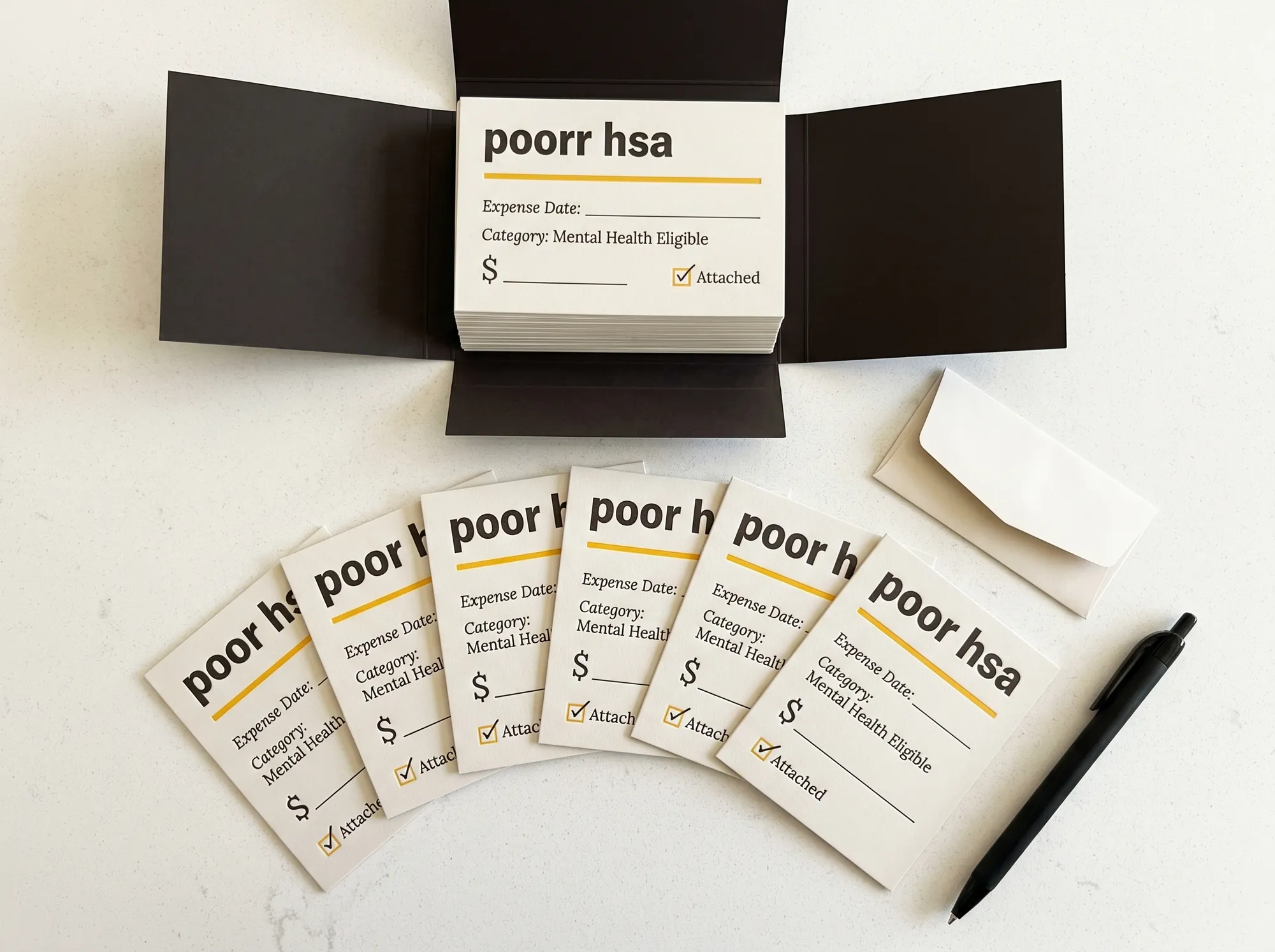
Stationery
Poorr HSA Card Set
A flat case of fifty letterpress HSA-tracker cards — wordmark, expense-date line, mental-health-eligible category row, dollar field, citrus 'attached' checkbox.
$24 per set
Signage
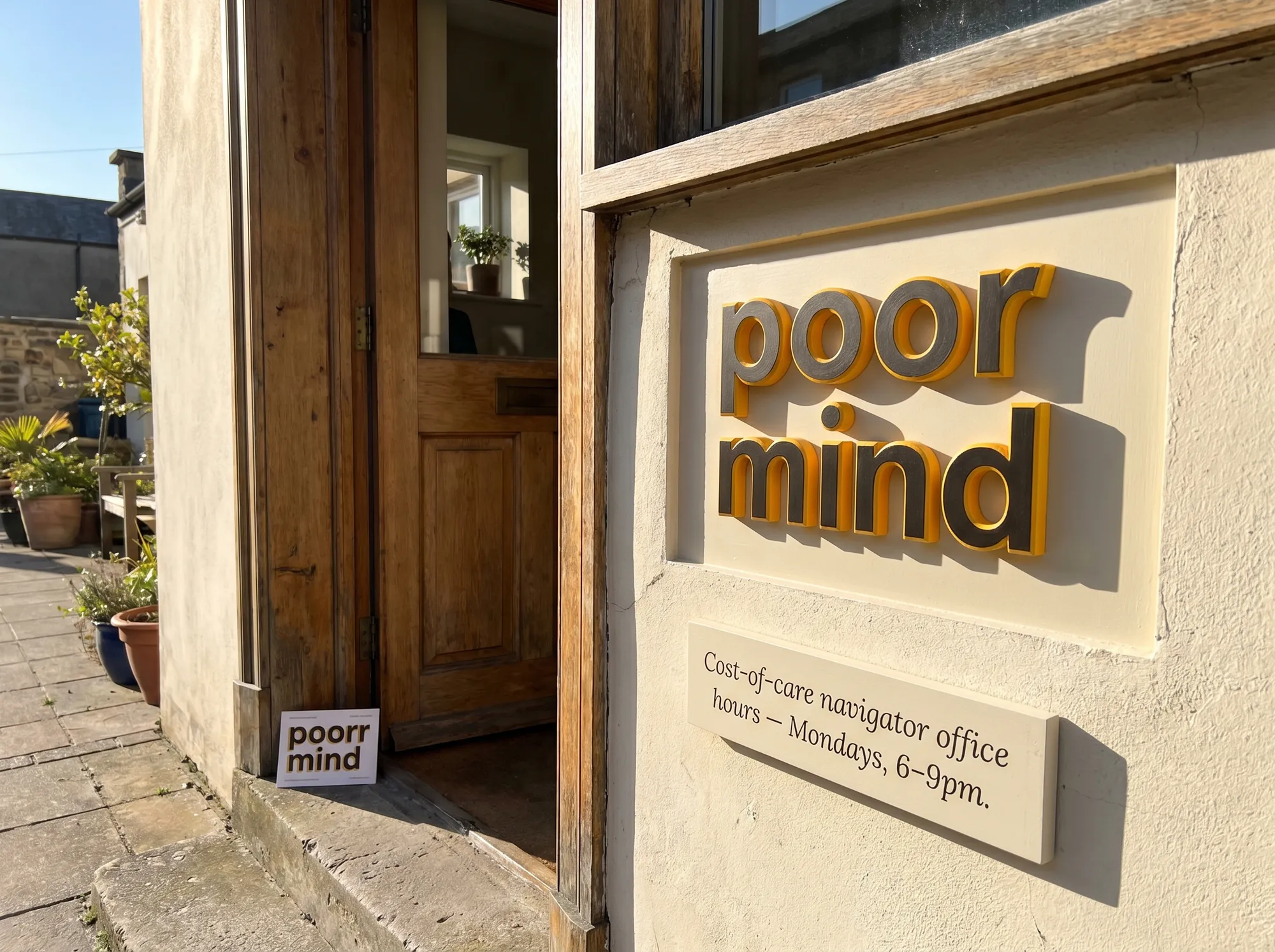
Poorr Mind Office Plate
The painted-MDF wordmark plate at the small Poorr workshop space during Mind office hours — working public signage marking the cost-of-care office window.
Internal use
Radio Ad Script
Thirty seconds of Poorr in this vertical. Visitors often play it twice — and every listen makes the brand a little more familiar in their head. That familiarity belongs to the owner.
“When was the last time a mental-health brand asked what you could afford before it asked what you were feeling? Poorr starts there. Regional cost-of-care, sliding-scale networks, straight answers. Poorr dot com.”
For the investor
Affordable Mental Health is one of 10 directions.
Every Poorr industry is an application of the same one-word thesis: the not-yet-rich audience is enormous, under-branded, and ready for a consumer brand that treats them as adults. You do not have to pick one vertical to own the domain. The ten industries in this package are a menu; the audience is the asset. While you choose, the editorial keeps ranking and the brand keeps compounding.